

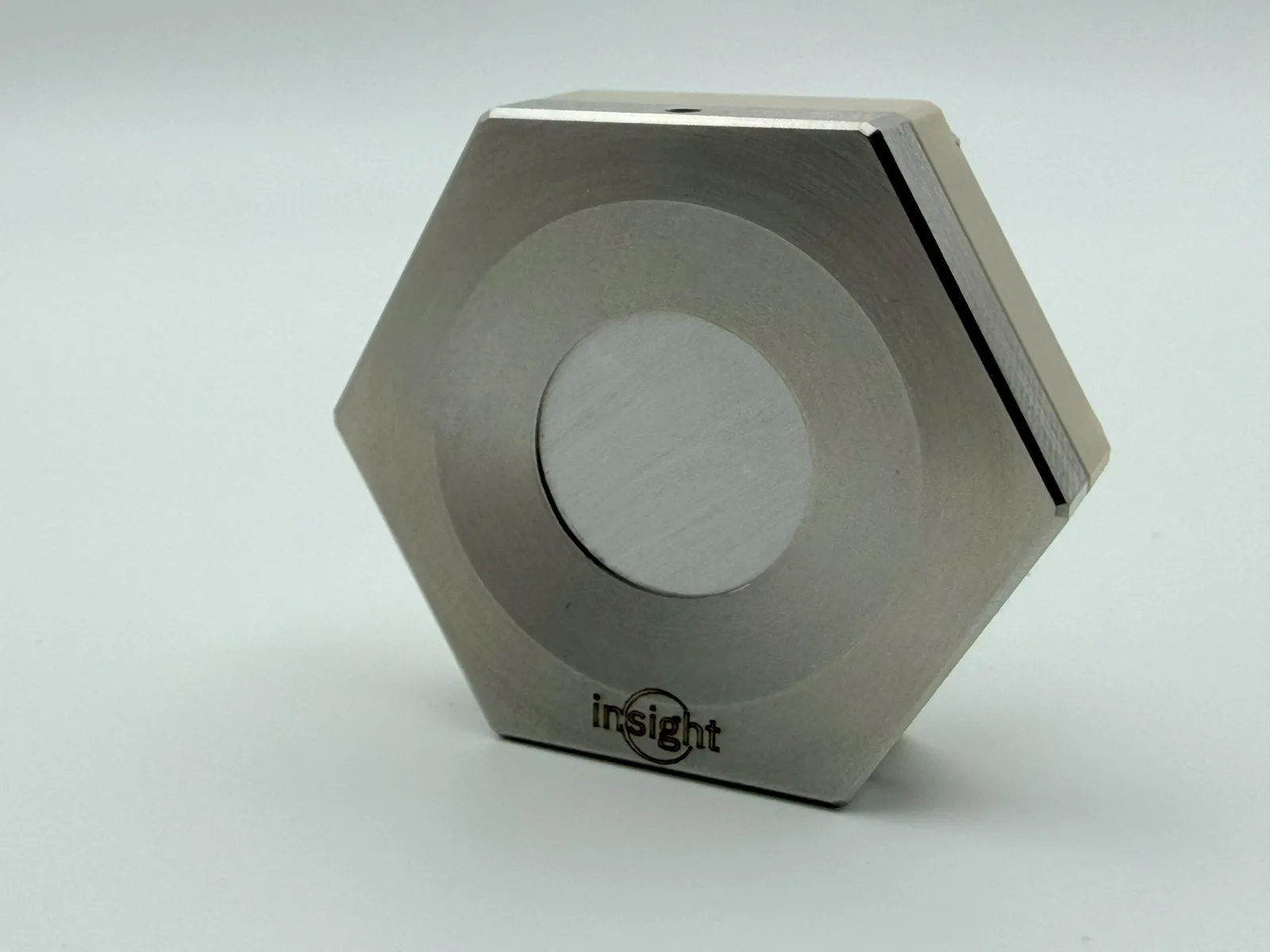
HexaCell Reflection
A light, easy-to-fill and reliable cell for operando electrochemical measurements in reflection geometry.
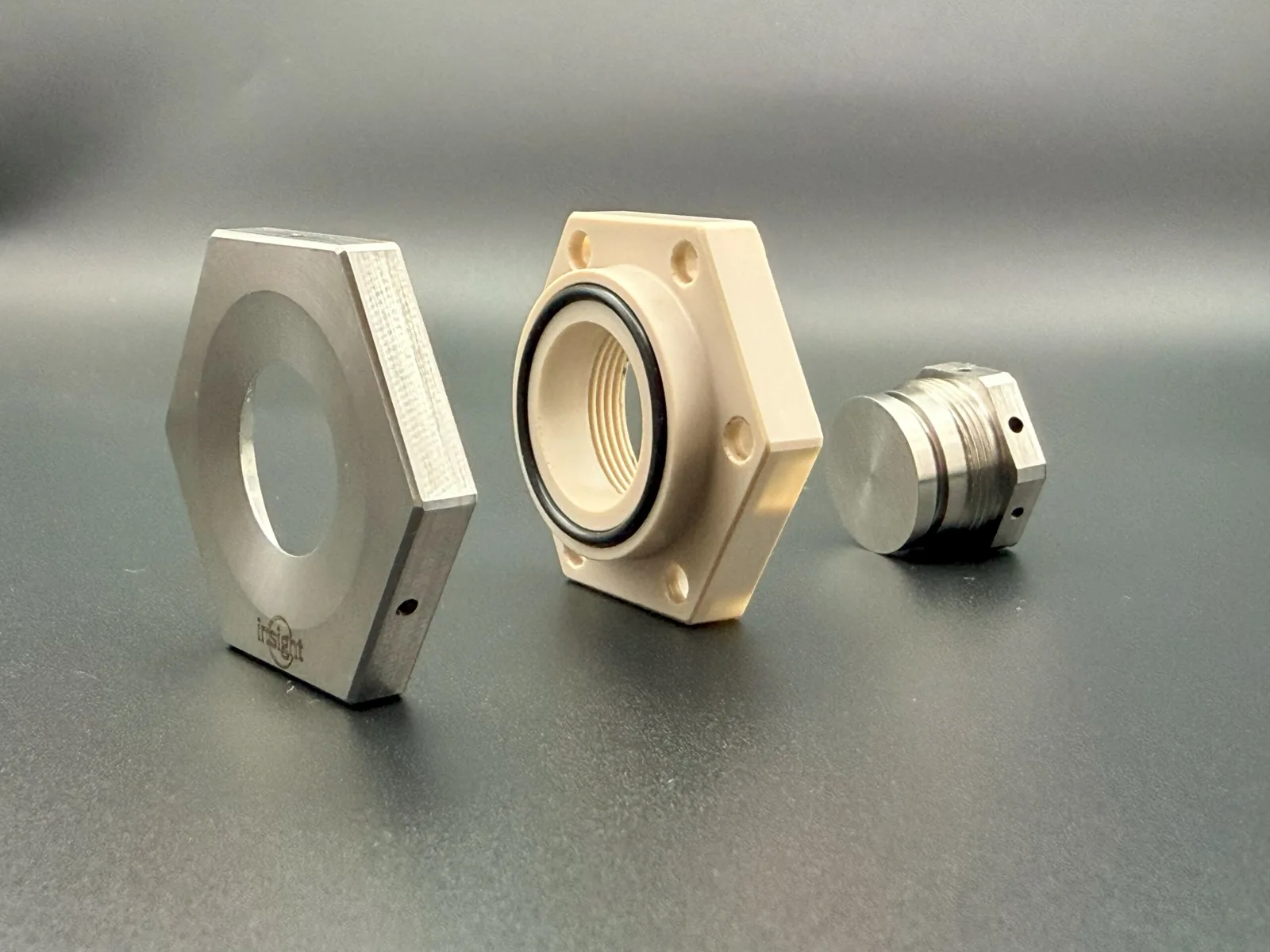
The HexaCell Reflection is our flagship operando cell. Its lightweight, hexagonal design makes it fast and straightforward to fill and assemble, without compromising on sealing reliability or measurement quality during electrochemical cycling.
Built for real-time monitoring of structural changes in battery materials, it lets you capture reliable, reproducible operando data — at the laboratory or on a synchrotron beamline.
The HexaCell is the commercial version of the LeRiChe'S Cell v2, successor of the original Leriche cell (2010) — both widely used in operando X-ray diffraction studies of battery materials.
- Technique
- Operando X-ray diffraction
- Geometry
- Reflection (θ-θ)
- Environment
- Laboratory diffractometer or synchrotron
- Windows
- Beryllium, aluminium or glassy carbon, all electrically conductive
- Also known as
- LeRiChe'S Cell v2 (Leriche cell)
Three window materials
All three are good electrical conductors. Match the window to your wavelength and sample requirements.
Beryllium
Excellent X-ray transmission, ideal for most operando diffraction setups, including laboratory diffractometers with a copper tube.
Aluminium
A cost-effective, robust alternative for shorter wavelengths: molybdenum radiation or synchrotron.
Glassy carbon
Well suited to measurements requiring low background scattering, at shorter wavelengths: molybdenum radiation or synchrotron.
Why conductive windows matter
Some operando cells use windows made of Kapton or glass, which do not conduct electricity, and this can alter the electrochemistry of the electrode behind the window. Beryllium, aluminium and glassy carbon are all good electrical conductors. How to choose a window
Why choose the HexaCell Reflection?
- Light and easy to fillStreamlined assembly designed to save you time in the lab.
- Reliable sealingConsistent, leak-tight performance across long electrochemical cycling experiments.
- Proven reflection geometryOptimised for θ-θ diffractometer setups, at the lab or at the synchrotron.
- Flexible windowsChoose beryllium, aluminium or glassy carbon depending on your experiment.
Need help choosing the right configuration?
Tell us about your diffractometer, beamline and experiment — we will recommend the right cell, windows and holder.